Suitable

Good tools are half the work
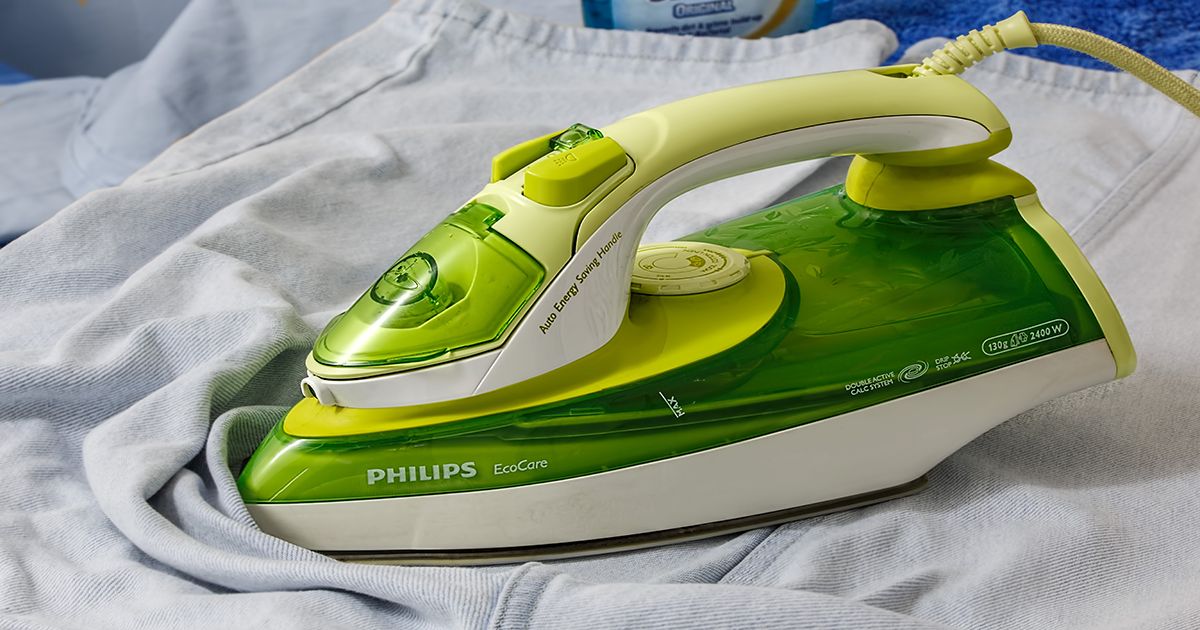
Choose a steam iron; the steam ensures that you glide effortlessly over your clothing. This also makes your garments last a lot longer, because they wear out less quickly. An ironing board with a thick, soft top layer gives your clothing just that little bit of extra comfort, and this way you iron the clothing smooth effortlessly. Try standing on a cushion while ironing; you will notice that the work goes faster. That is because the cushion takes the strain off your back and legs.
Use the right water
In many areas of the Netherlands, people have to deal with hard water. That means there is a lot of lime present in the water. This causes limescale on the iron and can, over time, leave white marks on your clothing. To prevent this, it is wise to use spring water or filtered water.
Check the care instructions
In the care label, you can find which setting you should set your iron to. The number of dots on the care label corresponds to the dots on the temperature dial of your iron. As standard, linen may be ironed the hottest, cotton a little less hot, and wool and silk should preferably be ironed lukewarm. Garments that are very dry are best sprinkled with a little water, optionally rolled up and put in a plastic bag for an hour. In addition, there are also special sprays available.
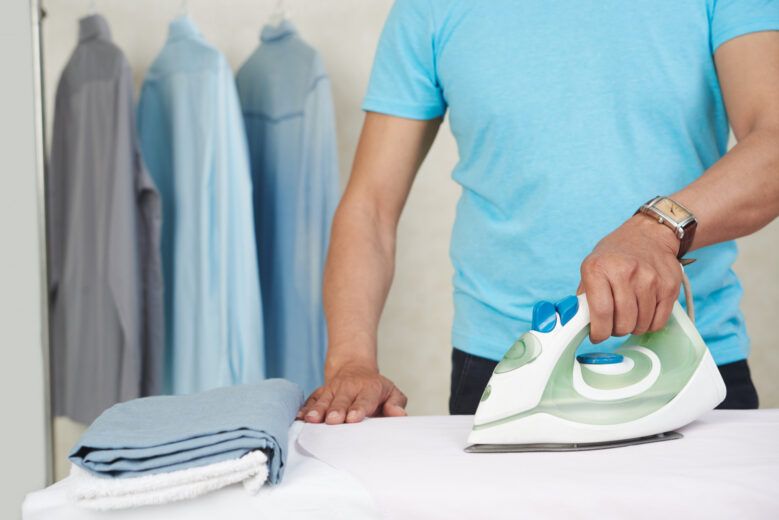
Not upside down, but inside out
Prevent discolouration, damage or the bleeding of any prints by turning your clothing inside out before you iron it. Hang cotton trousers up by the legs immediately after washing; this prevents difficulties during ironing. Make sure your clothing lies as a single layer on the ironing board and there is no piece of fabric underneath, because that is precisely what causes the creases. These creases too can be ironed away with extra steam for a crease-free result. For an extra smooth result, place a wet cloth on the clothing, iron over it and repeat the procedure with brown paper. The fabric will become firmer (hold its shape better) and look as if it has been treated by a dry cleaner.
Start at the beginning
A good start is half the work, so begin with ironing the collar. Undo all the buttons of your shirt and lay the collar flat. Iron your collar on both the inside and the outside, use extra steam for an optimal result. For shoulders, it is wise to lay one of the shoulder sections over the rounded part of the ironing board. This way you can easily iron the fabric smooth. Do you have stubborn creases or do you want to make a neat fold? Then you can press the garment. To do this, you place a damp cloth on the material that needs to be ironed. Set the iron to the hottest setting and press briefly (4 to 6 seconds) on the damp cloth and repeat it with some intervals if necessary.
The final touch
Button up your shirt, lay the sleeve flat at the side seam and smooth the sleeve out by hand, then go over it carefully with the iron. When ironing pleats, it is wise to place a piece of cardboard under the fabric so that an imprint of the iron is not accidentally left behind. Then go over the cuff one more time and your shirt is ready to do business again. Afterwards, it is best to stand the iron upright (on its back) rather than on a metal rack. Metal draws the heat away from your iron a lot faster, causing it to cool down more quickly.
Pssst, an extra tip…
Are you short of time or on a trip? Then non-iron shirts are a solution. These garments have undergone a special treatment, so the only thing you have to do is let the shirt dry on a hanger and put it on. The warmth of your body pulls the fibres taut, so you can start the day crease-free without an iron coming anywhere near! Non-iron shirts are, by the way, not forever crease-free; after 30 to 50 washes, an iron will have to go over these too. Visit one of our shops and let yourself be informed about the latest trends in non-iron shirts.