Suitable

Men’s shirts
A shirt is the basis for every formal outfit. A business shirt, after all, gives a businesslike look. A white shirt and a light blue shirt are two essential items. Supplement these with a vertical stripe and, if you feel comfortable in it, a subtle pattern. Avoid bright prints or tropical colours in this.
Suits and Blazers
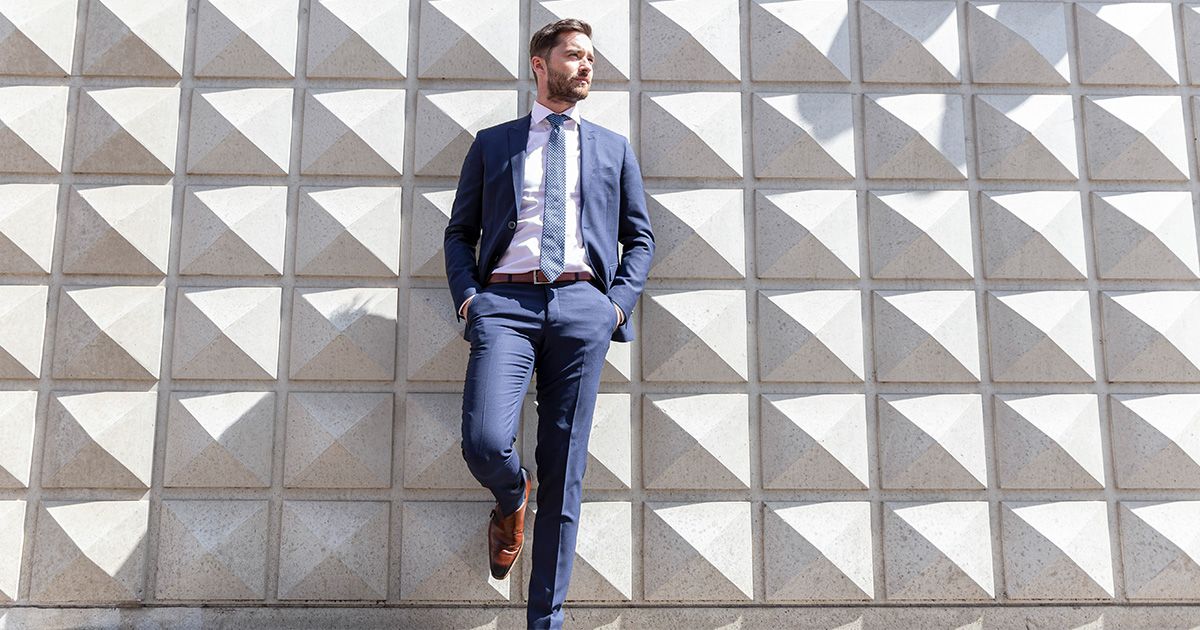
At formal companies, it's completely normal to wear a suit. Think of banks, lawyers and accountants. When buying a first suit, blue suits and anthracite suits are ideal. If you wear suits daily, it may also be a bit more striking. How about dark green suits or burgundy suits, for example? A checked suit now and then always does well too.
Don't have to wear a suit but do have to be smartly dressed? Then steal the show in a blazer and adapt it to the season. Wear, for example, linen blazers in summer and stylish wool blazers in winter. In the months in between, you're always fine with a cotton blazer or viscose blazer. Try to vary in colour and pattern.
The Trousers
A suit is sometimes too much of a good thing. Did you know you can therefore easily wear dress trousers separately too? Combine your dress trousers with a shirt and create a playful, businesslike look. Dress trousers are available in various versions. From woollen dress trousers to cotton dress trousers and nowadays you also have jog trousers! These have a drawstring for a sporty look. Do you like wearing dress trousers separately? Then play around with checks and colours.
Shoes to pair with business menswear
The importance of shoes is often underestimated. Yet it's one of the most important elements. You increasingly see people wearing brown shoes under a dark blue men's suit or grey suit. In the past that was not done, and people chose black shoes under a black suit.
Formal men’s dress shoes
The most common men's shoe is the lace-up shoe. Also called Oxfords and Derbies. Oxfords are more classic with a closed lacing, and Derbies have an open lacing. In addition, the Monk strap is also popular! This shoe has one or two buckles to fasten the shoe.
Casual style men’s shoes
At one company, formal men's shoes are mandatory, while at another company the rules are more relaxed, as long as you look presentable. Shoes that meet these requirements well are a smart white sneaker, loafers and Chelsea boots. The white sneaker speaks for itself. Do make sure you keep it really white. A dirty white sneaker quickly looks sloppy. Loafers are stylish slip-ons that work very well if you're wearing just dress trousers with a shirt. This creates a stylish yet casual look. Chelsea boots are nice for the colder days. These are, after all, boots, often made of suede or leather, without laces. The ankle boots have an elastic closure.
Accessories
Don't underestimate the power of accessories; pay just as much attention to these as to the rest of your business outfit.
The Tie
Suitable has an extensive assortment of ties. Ties are available in various colours. Each colour has a different meaning; we highlight the most popular colours for you:
- Red tie: radiates strength, power and passion. Do pay attention to the shade of red. Light shades are associated with creativity. Shiny red ties stand for ambition, matte ties are more subtle in that respect. The wine-red ties radiate confidence.
- Purple tie: stands for self-confidence and making a good first impression. This tie does well at important appointments where you're meeting for the first time. Combine a purple tie with a white shirt or with a subtle purple stripe. Avoid the combination with a light purple shirt, as that can be too conspicuous.
- Yellow tie: makes you approachable to others. With a yellow tie you radiate certainty, vitality and optimism.
- Blue tie: nice and safe and always good. Blue keeps people calm and it inspires confidence. There are many different shades of blue. Whichever you choose doesn't matter.
There are also colours we advise against. For example a black tie: black is chic and has developed into a refined impression. Yet with a black tie you can come across as arrogant. Therefore only wear a black tie to a party. The same applies to grey; in addition, the colour is old-fashioned. With a green tie you quickly come across as loud, and the meaning varies greatly from country to country. If you work with international clients, we advise doing thorough research beforehand should you still like to wear a green tie.
A belt
You always wear a shirt tucked into dress trousers or jeans. This means the belt is visible. A belt is a striking item. Make sure it's always in line with your shoes. Dark blue suede men's shoes? Then you wear a dark blue suede belt with them. That applies to all colours, except with white sneakers. There it can all be a bit more relaxed; just take a look at the rest of your outfit and decide what kind of belt you wear with it.
And other smart business combinations!
A men's suit is a suit. Try combining it differently for a change too. Replace the dress trousers with dark blue jeans. Whether you finish off your outfit with dress shoes, sneakers or loafers, you still look stylish.
On some days it may be a bit more casual too. Did you know you can replace a shirt with a polo? We advise choosing tone-on-tone and leaving aside polos with striking colours and emblems. In addition, with this set you can leave off the blazer and appear at the office with just dress trousers and a polo. Finish off the outfit with smart sneakers.
Checklist to get back to business
With this checklist you put together your perfect business wardrobe:
- In addition to the standard suit, also look for separate garments. A chino, for example, shouldn't be missing. A chino for men combines well with a shirt and blazer.
- Make sure the clothing fits closely and suits your build. If the clothing is too loose, you can give the wrong impression. Our customer service is happy to help you further, or visit one of our shops to be advised.
- Shirt tucked into your trousers or loose? Business shirts are a lot longer, so they're worn tucked in. Casual shirts are shorter and may go over the trousers. Do note: never wear a shirt loose with dress trousers.