Organising a dinner yourself? Then send your invitation on time, preferably two to three weeks in advance. For international guests, you can allow four to six weeks. State clearly:
- Where and when the dinner takes place;
- Whether there is a dress code;
- Whether children are welcome, possibly with a special children's table.
Received an invitation? Let them know quickly whether you'll be there. That's not only polite, but also practical for the host. At the same time, indicate whether you have dietary requirements or allergies. If you're unable to attend, say so as soon as possible. That way you prevent any awkwardness.
Bringing a small gift is the universal token of appreciation for the invitation and the effort the host has made. A good bottle of wine, a nice bunch of flowers or luxury treats are always fine. Give the gift to the host on arrival and with a smile.
Do note that you shouldn't bring food for the dinner, unless this has been explicitly requested. Also avoid bringing an overly expensive gift; this can embarrass the host.
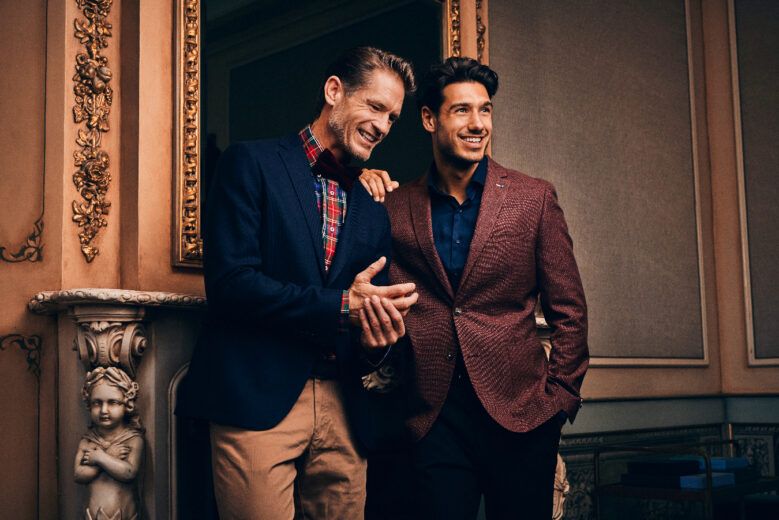
The festive season is the perfect occasion to invest in a refined look. It's wise to first know the context of the party. After all, work drinks call for a different look than a family dinner. The key to a successful outfit is to combine stylishly and festively, without overdoing it. Think, for example, of a dark blue blazer, wine-red sweater or a smart shirt.
Is there no dress code? Then go for a smart casual outfit: a smart men's sweater, shirt and a well-fitting chino. A more formal dinner calls for a men's suit with tie or bow tie. Optionally add a subtle pattern or colour accent. Make sure your shoes are neat or well polished to finish off your outfit.
Dress code inspiration:
- Casual chic: trousers + smart shirt + fine merino wool sweater + suede boots
- Smart casual: blazer + chino + printed shirt + leather shoes
- Formal: dark suit + white shirt + bow tie or tie + polished lace-up shoes

Arrive on time. This means not too early (no more than 5 minutes) and no later than 15 minutes after the agreed time. Hang up your winter coat, greet the other guests with a smile and a firm handshake. Make some small talk before you sit down. That way you break the ice straight away.
Follow the host's directions to find your seat. Only start eating once everyone is seated and the signal has been given. This is usually when people wish each other a good meal. Use the cutlery from the outside in, keep your elbows close to your body and don't talk with your mouth full. Also avoid smacking and chewing with your mouth open. With a napkin on your lap, you prevent stains on your trousers. When leaving the table, don't put the napkin on your chair, but loosely next to your plate.
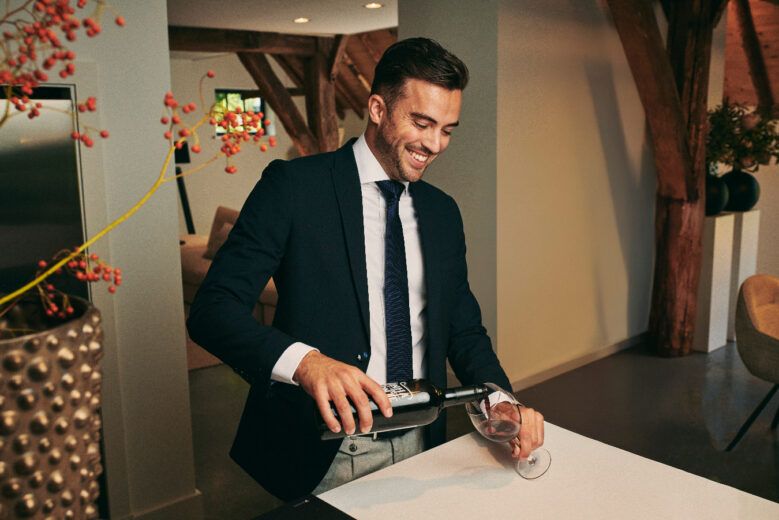
While toasting, you look at the person taking the floor. Raise your glass and bring it to your lips; drinking isn't necessary. Don't drink alcohol? No problem, but be clear and friendly. Feel free to ask for an alcohol-free alternative.
Avoid politics, religion and gossip. Rather talk about holidays, films, books or the festive setting. Give compliments, ask questions, and be sincerely interested. It's not done to be on your phone during the conversation or to have it lying on the table. Put your phone on silent and out of sight. That way you show that you respect the time of your company.
Don't leave right after the meal, but also not as the last one. A good moment is after coffee, or about an hour after dessert. Usually you sense this yourself by keeping an eye on the tiredness of your company. Say goodbye to the host personally and thank them warmly for the lovely evening, and take discreet leave of the other guests. Send a short message the next day to thank them once more. This is an elegant way to round off your visit and is always appreciated.