Suitable

How were the first ties knotted?
This was done with the single Windsorknot, named after the Duke of Windsor. It’s also known as the uniform knot, as it’s the knot used for ties that form part of a uniform. There are two variations of the Windsor knot: the single and the double Windsor. The single Windsor is a slim, triangular knot; the double Windsor is very similar, but thicker and more intricate to tie. Together with the FourinHand (a simple tie knot), these are still the most commonly used knots.
How wide should a tie be?
The current standard width is eight centimetres, just as it was at the start of the previous century. In the twenties and thirties, widths did increase—you’d see ties as wide as twelve centimetres; just look at American gangster films. In the fifties and sixties, ties became slimmer. You can also take the lapels of your blazer as a guide: your tie should be about as wide as the widest point of your lapel.
So, how long is a tie?
A classic tie is about one and a half metres long. Since you can’t achieve that with a single piece of fabric, you’ll often see a seam in the narrow section of the tie. That seam is always diagonal, because a tie is cut on the bias; otherwise you wouldn’t be able to tie it properly. According to etiquette, the tip of your tie should just touch your waistband. Also make sure the tie doesn’t hang below your blazer.
What material is a tie made from?
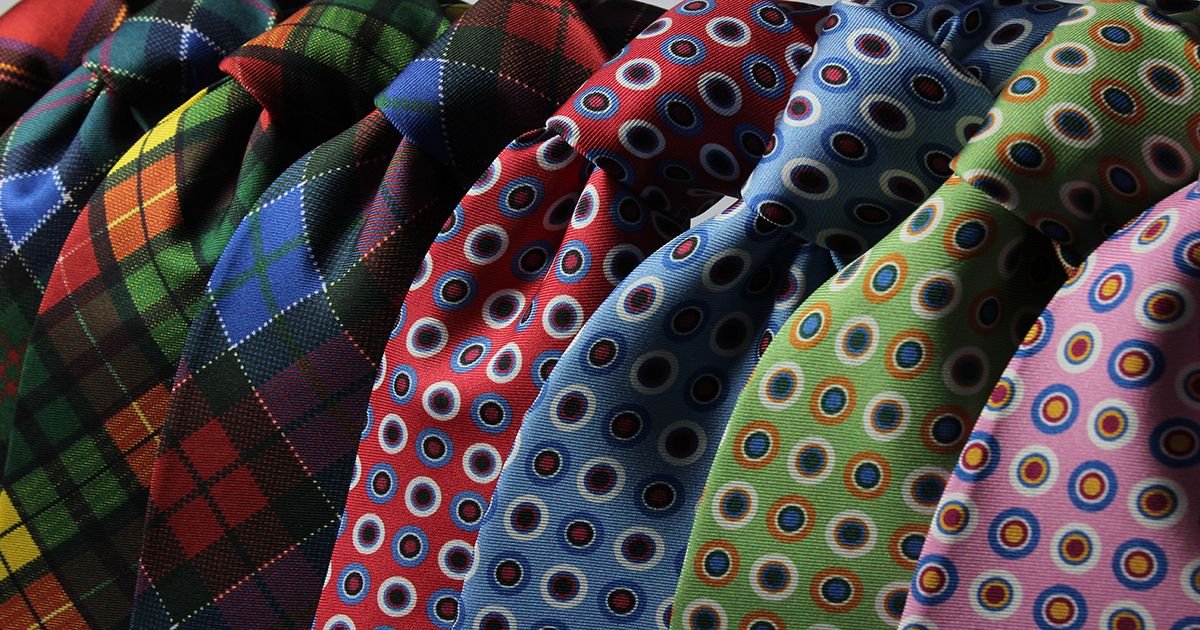
The best men’s ties are made from silk. You’re also seeing knitted wool ties again these days, especially in summer. That really dates back to the 1920s, when men paired them with tweed jackets and plus-fours. A knitted tie adds a sporty twist to your outfit. Today, many ties are also made from synthetic fabrics.
How do you keep a tie looking sharp?
A silk tie is delicate, but these simple tips will help keep it in optimal shape:
- Place a damp tea towel (not too wet) over a creased tie and carefully run a hot iron over it. Do this for just a few seconds.
- If you iron a tie, it’s also important to iron the back. That way, the visible front stays looking its best for longer.
- It’s also wise to undo the knot after each wear and store your tie hanging on a tie rack.
What is the best colour?
This depends entirely on what works best with your skin tone and shirt. In recent years, demand for ties with a subtle pattern or a standout colour has increased again, for example. Red ties can evoke associations with power and are often worn by politicians. A blue tie projects calm confidence and is a smart choice for important meetings or job interviews. Ultimately, go for what you like and what suits you.